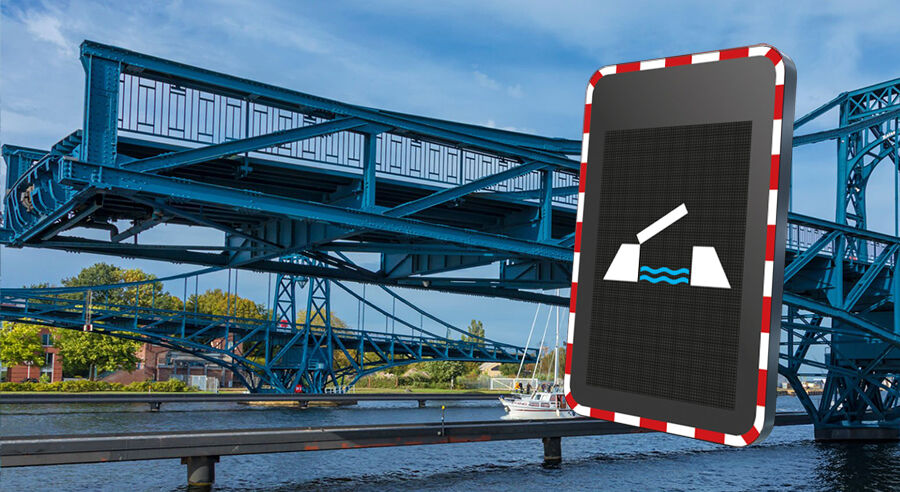
Dynamic traffic management when a bridge is about to open
Particularly on busy access routes that are used by a large number of lorries every day, short-term bridge openings often lead to:
- increased traffic volume
- long traffic jams
- unnecessary waiting times
- additional environmental pollution caused by stationary traffic
The solution: early information through intelligent display
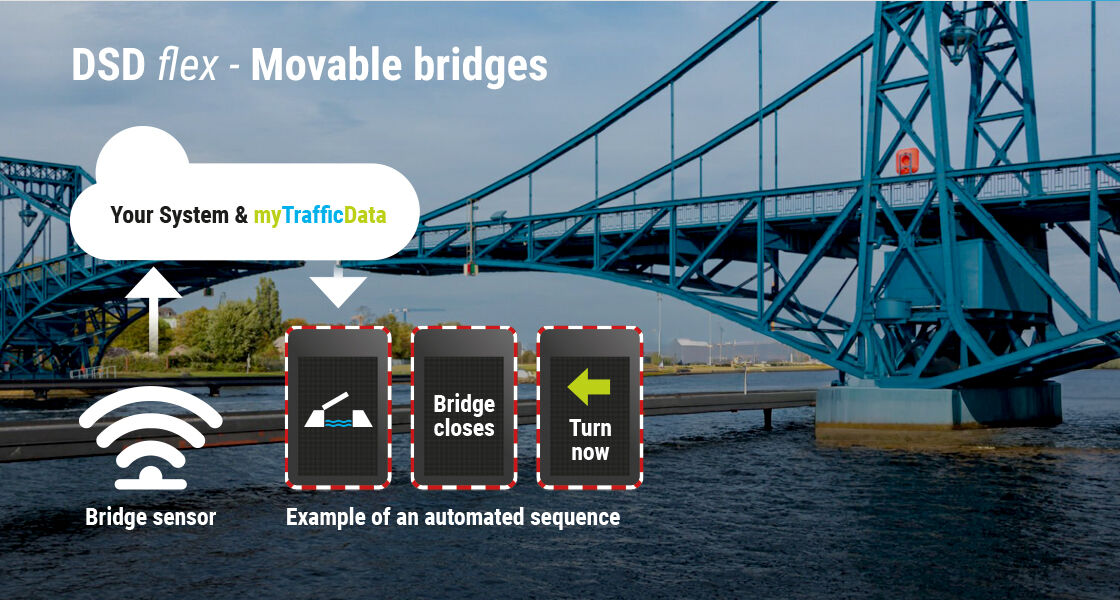
To optimise traffic flow, DSD flex displays are installed on both sides of the bridge approach, which record speeds, store traffic data and inform road users in good time about an upcoming opening. The sensors installed at the bridge barriers automatically transmit the status of the bridge (open/closed) to the myTrafficData platform via API.
As soon as an opening is imminent, this information is forwarded in real time to the DSD flex displays. The displays, which are located at key points, automatically adjust their content accordingly and alternately display defined image and text messages. Road users are thus informed in good time and can choose alternative routes before traffic jams occur.
Sustainable added value for infrastructure and the environment
By diverting heavy goods traffic at an early stage:
- traffic jams are significantly reduced
- waiting times are minimised
- emissions from unnecessary idling are reduced
- alternative traffic routes are used efficiently
This not only contributes to the sustainable relief of existing infrastructure, but also makes an important contribution to reducing environmental pollution in the vicinity of heavily frequented traffic axes.
Flexible application options – also as a stand-alone solution
The DSD flex can be integrated into existing infrastructure or operated independently as a stand-alone solution. In addition to displaying and storing speeds, the following content can also be displayed, depending on the application:
- Warning messages
- Traffic-related information
- Citizen information
- Temporary diversions
- Situation-dependent hazard warnings
Thanks to the open system architecture, it is also possible to connect additional external sensors. For example, temperature sensors, water levels and other traffic counting systems can be integrated to automatically issue further warning messages, such as in the event of black ice.
Would you like to find out more? Get in touch now!
Your DataCollect team